
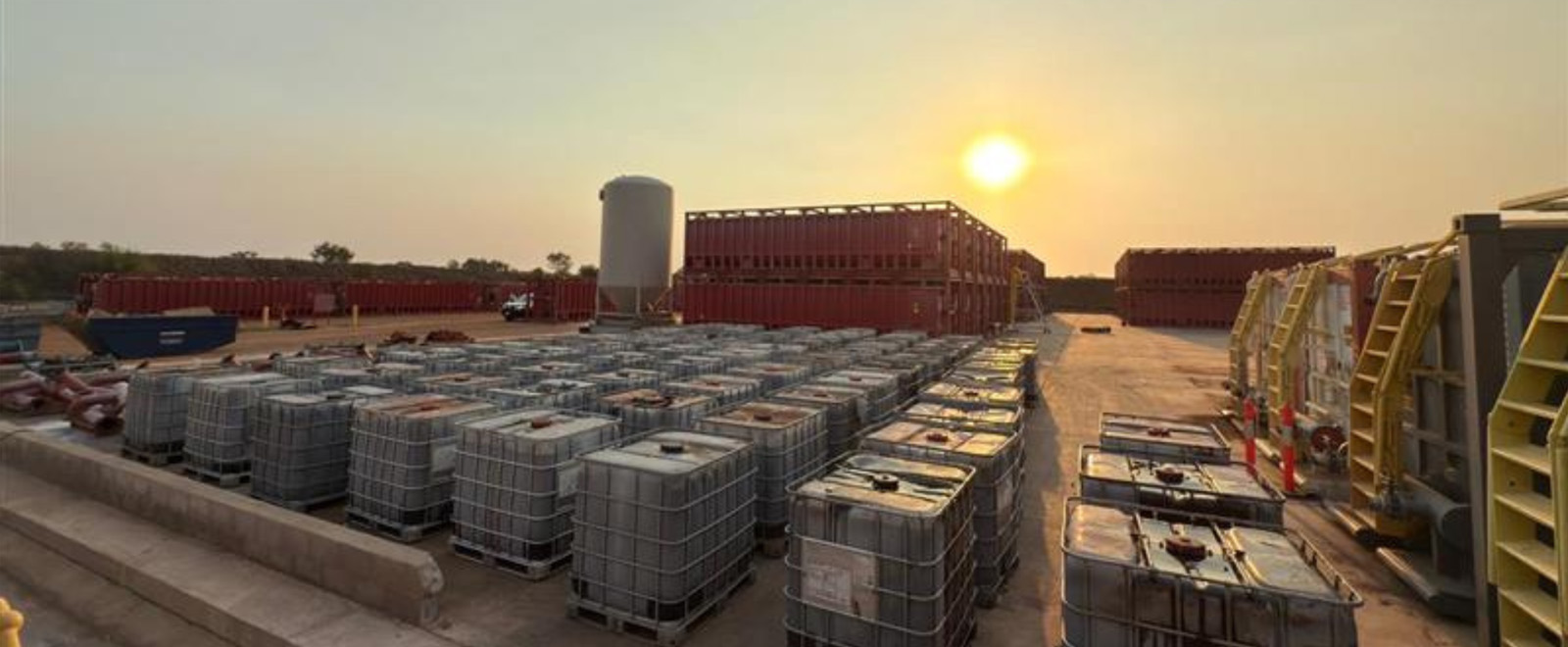
InterGroup was engaged to clean 69 industrial tanks as part of a site decommissioning and remediation programme for Halliburton. The tanks contained residual Synthetic-Based Drilling Mud (SBM) and other by-products requiring safe removal. This large-scale project involved confined space entry, waste removal and strict environmental compliance under challenging site conditions.
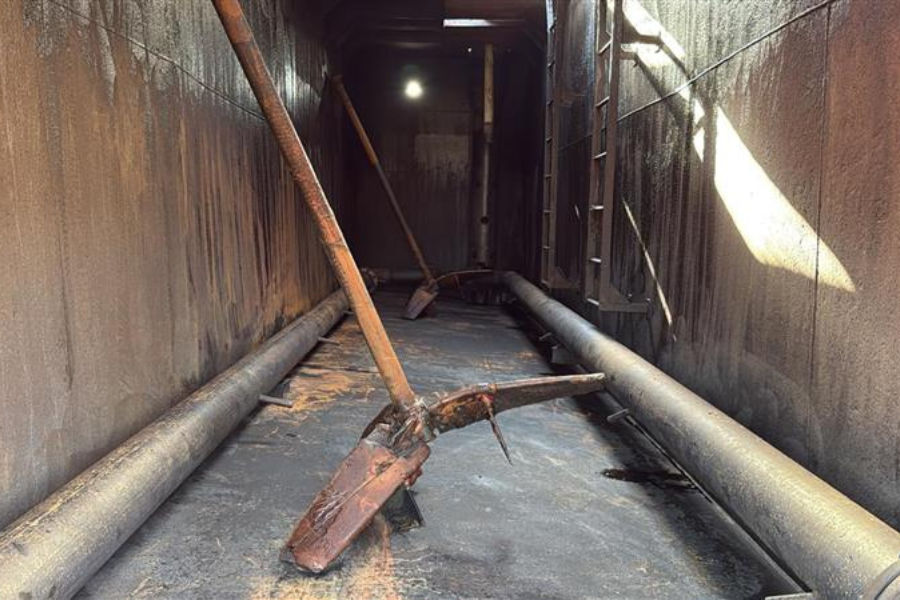
Inside one of the industrial tanks
What We Did
Our highly skilled team removed approximately 750 tonnes of waste from 69 industrial tanks through confined space entry, ensuring each tank was thoroughly cleaned to brine specification and all contaminants were eliminated. InterGroup also managed the treatment and disposal of waste, safely transporting all hazardous materials and fluids in accordance with all applicable regulations and environmental standards. Throughout the project, we maintained thorough safety protocols, including a permit-to-work system, use of full PPE, continuous ventilation and atmospheric monitoring and emergency rescue procedures.
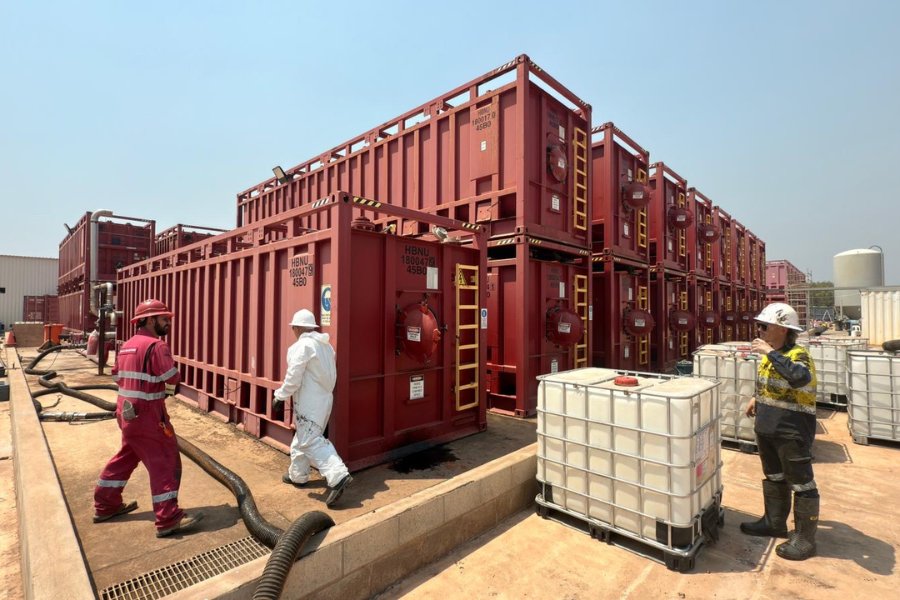
Our team worked around the clock to complete this project in half the originally estimated time.
Confined Space Control
Confined-space safety was tightly controlled through a permit-to-work system, emergency harnesses and ropes and continuous atmospheric monitoring by a trained Safety Watch.
Ventilation was maintained with forced air at the tank entry and extractor fans at the rear to ensure safe conditions. Quality assurance was verified by regular client inspections, confirming each tank met brine specifications before sign-off.
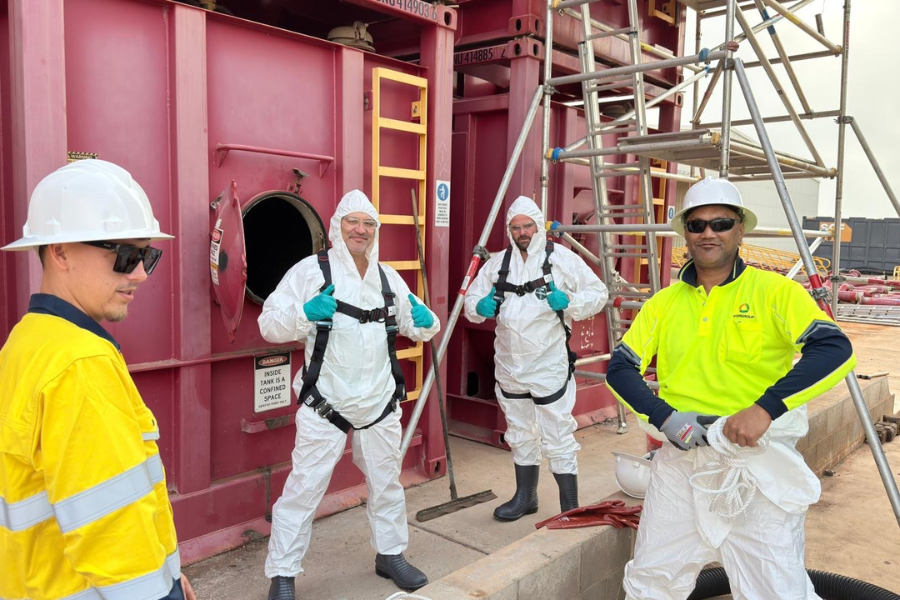
The team suited up and preparing for confined space entry.
Meeting complex Challenges
Operating in a remote area of Western Australia added logistical pressure, with a 10-person team mobilised from New Zealand.
Working in temperatures reaching 40°C, our team faced a demanding and high-risk environment. Fatigue management was essential. Rotations were strictly enforced, with individual tank entries limited to 30–75 minutes depending on the time of day. To reduce exposure, the team shifted to 5 am starts after the first week, taking advantage of cooler mornings.
A dedicated cool room with air conditioning, bottled water, and electrolytes provided mandatory rest periods, while daily toolbox talks reinforced hydration, recognition of heat stress and gradual acclimatisation.
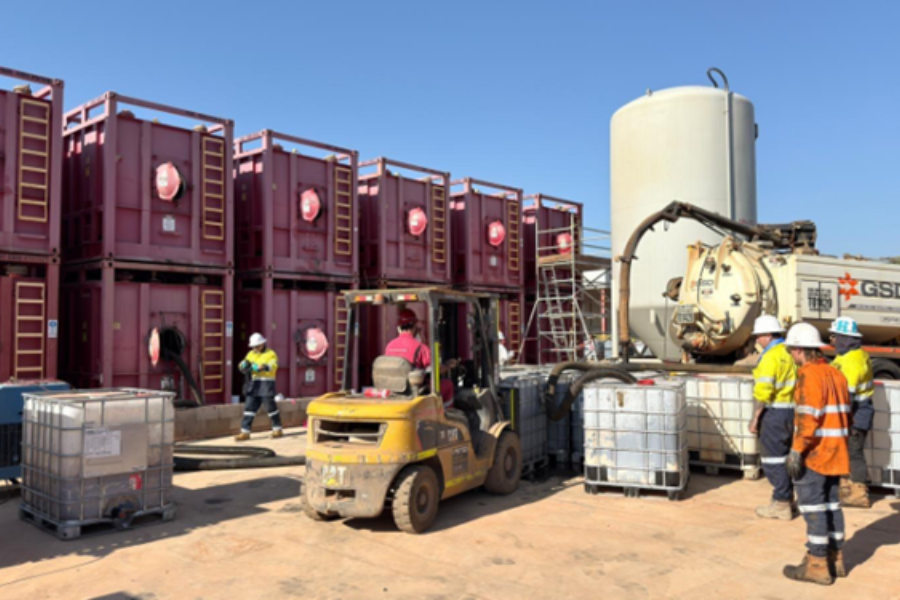
Working in extreme heat – our team in action
Project Results
While the scope was increased by 240% over the original engagement parameters, we stayed on schedule and completed the project in less than half the originally estimated time – true testament to InterGroup’s ability to adapt our schedule and resourcing to deliver under pressure.
Client Feedback
Halliburton praised InterGroup’s clear communication and proactive approach, noting that daily discussions and walkarounds kept the project on track. Despite challenging conditions, our crew maintained high morale and delivered all work safely and ahead of schedule – meeting all required quality standards throughout.