
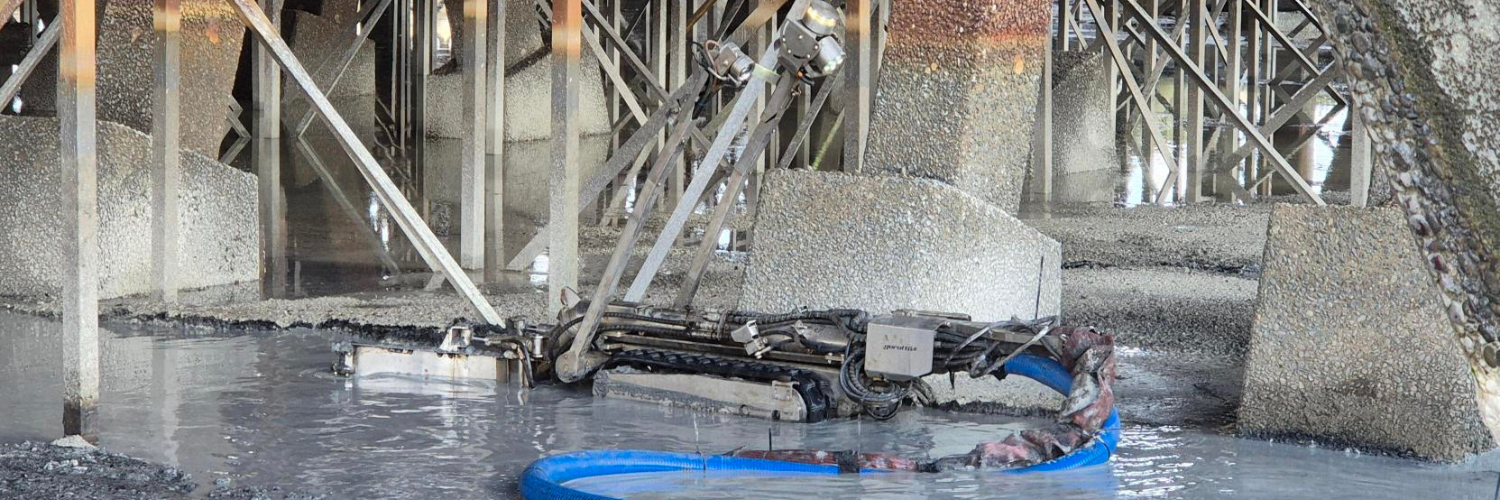
The Ohaaki Geothermal Power Station operates large concrete cooling towers that naturally accumulate heavy sludge deposits at their base over time. Historically, sludge removal had only been carried out every four to eight years due to the complexity and risk involved.
Traditional de-sludging required personnel to enter a confined space and complete physically demanding manual work. Dormant geothermal sludge can release hydrogen sulphide, a toxic and highly flammable gas, exposing workers to significant health and safety risks. The towers’ hyperboloid concrete design further restricted access, making the task both logistically difficult and hazardous.
Our team was mobilised on-site to carry out geothermal sludge removal from ohaaki geothermal station
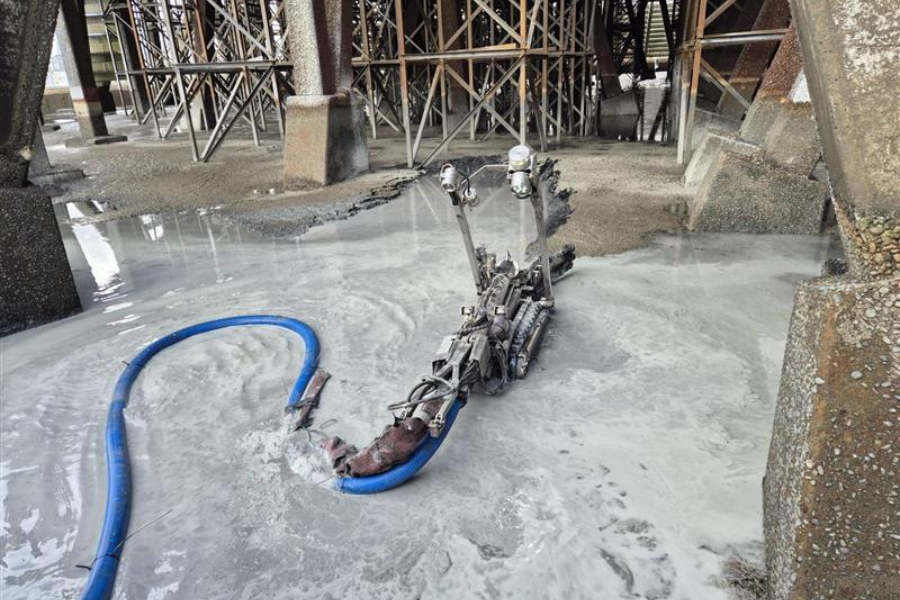
Gerotto Lombrico S increases sludge removal from 14 to 50 tonnes per shift.
What We Did
We delivered a no-man entry desludging solution for Contact Energy’s Ohaaki geothermal cooling towers using the Gerotto Lombrico S robotic cleaning system.
The Zone 0 certified robot was remotely operated by a small specialist crew and equipped with interchangeable tooling, including high-pressure water blasting, augers, squeegees, cameras and lighting. This enabled continuous sludge removal while maintaining full visibility and control, without personnel entering the confined space.
The works were completed over 10 shifts, with geothermal sludge safely loosened, collected and removed. Extracted material was lime-treated on site to ensure it was safe for handling and transport.
The robotic approach eliminated confined-space entry, reduced exposure to hydrogen sulphide, and delivered a safer, more efficient desludging operation with fewer personnel on site.
Meeting complex Challenges
The Ohaaki cooling towers presented a high-risk working environment driven by both chemical and physical hazards. Dormant geothermal sludge released hydrogen sulphide when disturbed, creating a toxic and potentially flammable atmosphere within an oxygen-poor confined space.
Under traditional methods, this environment required heavy PPE and strict time limitations on worker exposure. Crews could only operate in short intervals, leading to rapid fatigue, frequent crew rotations and extended project durations. Each additional shift increased operational cost and prolonged cooling tower downtime.
Physical constraints inside the towers further complicated the work. Limited access, poor visibility and the need to handle heavy equipment slowed progress and placed additional strain on personnel. Balancing safety controls with productivity in such conditions made sludge removal a complex and high-risk operation.
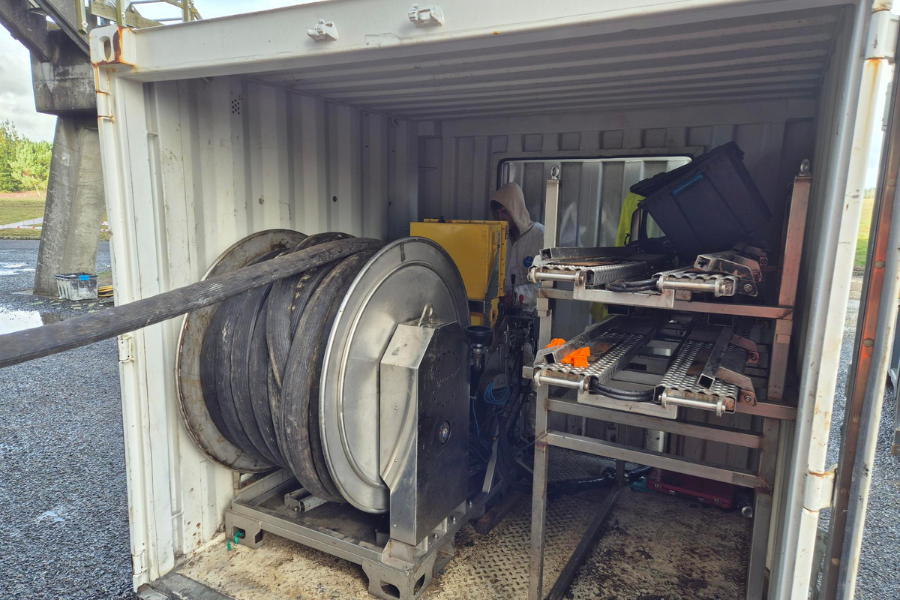
Operators control the Gerotto from a secure location outside the hazardous zone
Project Results
The shift to robotic desludging delivered a substantial improvement in performance and safety. Productivity increased from approximately 13–14 tonnes per shift using manual methods to around 50 tonnes per shift with the Gerotto Lombrico S, while crew requirements were reduced from eight operators to three. The approach also enabled extended, continuous operations without safety-driven stoppages and removed the need for personnel to enter a hydrogen sulphide environment, significantly reducing exposure risks and improving overall site safety.
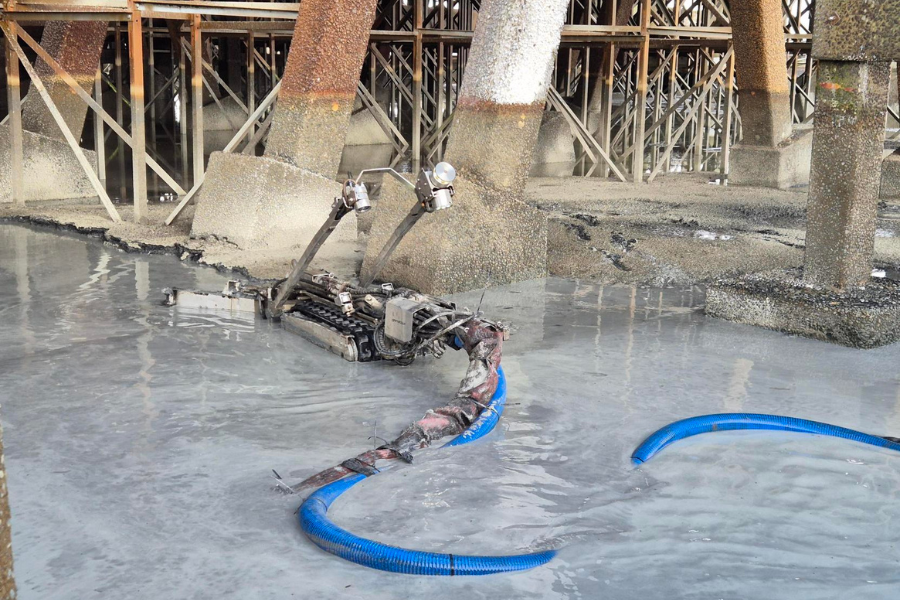
Gerotto Lombrico S navigating the confined cooling tower base at Ohaaki, eliminating the need for manual entry.
Client Feedback
Our client (Contact Energy) had a clear priority to remove the sludge efficiently without compromising worker safety. The Gerotto solution exceeded these expectations by delivering greater productivity, a smaller crew footprint, and a complete elimination of confined space entry.
Vian Smith, Head of Industrial at InterGroup, remarked:
“The Gerotto proved its value on this project, not only exceeding the client’s expectations but also delivering clear safety benefits. By removing the need for manual entry into the hazardous cooling tower our crew faced zero risk. This is a smarter, safer way of working.”