
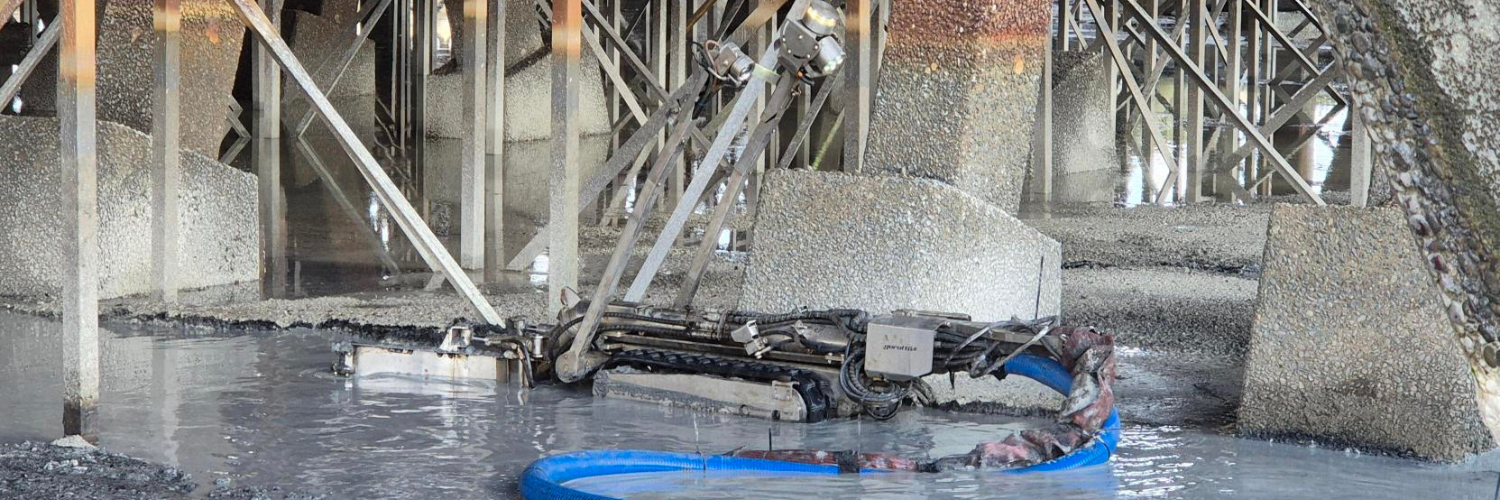
InterGroup was initially engaged by Contact Energy to support planned maintenance works inside the Ohaaki Geothermal Power Station cooling towers, including internal cleaning, beam cleaning and corrosion inspection activities. During these works, it became clear that significant sludge accumulation at the base of the cooling towers was impacting operational efficiency and would also need to be addressed as part of the wider maintenance programme.
Our team was mobilised on-site to carry out geothermal sludge removal from ohaaki geothermal station
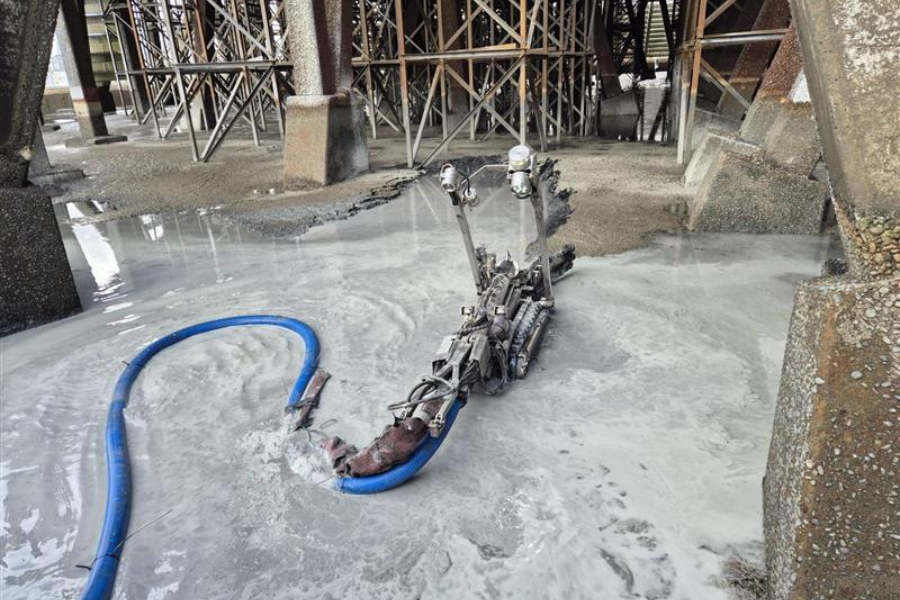
Gerotto Lombrico S increases sludge removal from 14 to 50 tonnes per shift.
What We Did
We delivered a no-man entry desludging solution using the Gerotto Lombrico S robotic cleaning system, supported by InterGroup’s in-house hazardous waste transport and treatment capability.
A comprehensive Safe Operating Procedure (SOP) was developed in conjunction with Contact Energy, incorporating gas release mitigation measures, continuous atmospheric monitoring, exclusion zones and stringent PPE requirements for all personnel working within the project area. The methodology was reviewed, accepted and adopted by Contact Energy prior to commencement.
An initial trial was undertaken to validate the gas mitigation process and confirm the effectiveness of the proposed methodology. Following the successful trial, vacuum tankers were mobilised to work in conjunction with the Gerotto system to continuously extract and transport sludge from the base of the cooling towers.
The Zone 0 certified Gerotto robot was remotely operated by a small specialist crew and equipped with interchangeable tooling including high-pressure water blasting, augers, squeegees, cameras and lighting. This enabled continuous sludge removal while maintaining full visibility and control, without personnel entering the confined space.
Approximately 450 tonnes of geothermal sludge was removed across eight shifts. Extracted material was transported to InterGroup’s consented Stonedon Drive hazardous waste treatment facility, where it was processed using our established treatment methodology within a negative-pressure hazardous waste treatment shed under the supervision of our site chemist.
The integrated delivery model enabled Contact Energy to engage a single contractor for the full scope of works, creating efficiencies across mobilisation, programme coordination, waste handling and compliance management.
Identifying a Wider Maintenance Requirement
Historically, sludge removal from the cooling towers had only been carried out every four to eight years due to the complexity and risk involved. Traditional desludging methods required personnel to enter a confined space and manually remove material in a hazardous environment. Dormant geothermal sludge had the potential to release hydrogen sulphide gas when disturbed, creating significant health and safety risks for workers. The towers’ hyperboloid concrete design further restricted access, making the task both logistically difficult and hazardous.
Adding Value Through Integrated Service Delivery
Drawing on our integrated industrial services and hazardous waste capability, InterGroup proposed, planned and delivered a complete end-to-end solution encompassing robotic cleaning, sludge extraction, transport, treatment and disposal.
Working collaboratively on site with Contact Energy’s Project Manager, we developed a safe and cost-effective method for sludge removal – while minimising personnel exposure and operational disruption.
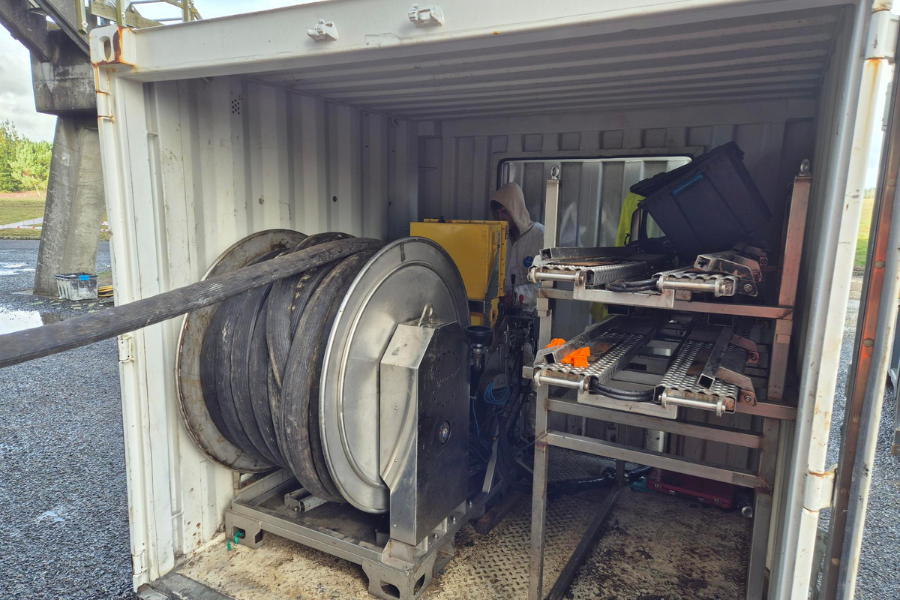
Operators control the Gerotto from a secure location outside the hazardous zone
Meeting complex challenges
The Ohaaki cooling towers presented a high-risk working environment driven by both chemical and physical hazards.
Under traditional methods, this environment required heavy PPE and strict time limitations on worker exposure. Crews could only operate in short intervals, leading to rapid fatigue, frequent crew rotations, and extended project durations. Each additional shift increased operational cost and prolonged cooling tower downtime.
Physical constraints inside the towers further complicated the work. Limited access, poor visibility and the need to handle heavy equipment slowed progress and placed additional strain on personnel. Balancing safety controls with productivity in such conditions made sludge removal a complex and high-risk operation.
By combining robotic cleaning technology with InterGroup’s hazardous waste expertise, vacuum extraction capability, and established treatment infrastructure, the project team was able to significantly reduce risk while streamlining delivery across the entire sludge management process.
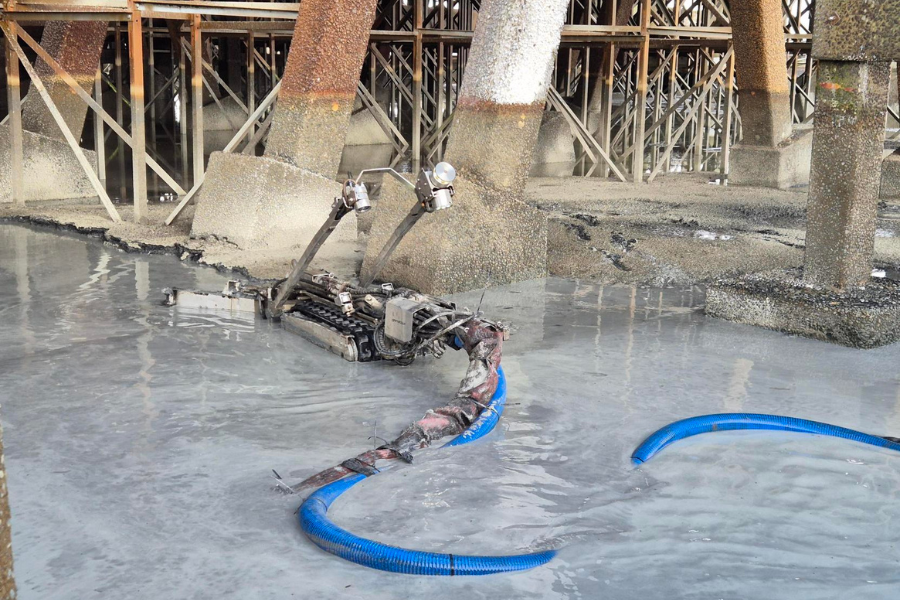
Gerotto Lombrico S navigating the confined cooling tower base at Ohaaki, eliminating the need for manual entry.
Project Results
The shift to robotic desludging delivered a substantial improvement in both performance and safety outcomes. Productivity increased from approximately 13–14 tonnes per shift using traditional manual methods to approximately 50 tonnes per shift using the Gerotto Lombrico S, while crew requirements were reduced from eight operators to three.
The approach enabled extended, continuous operations without safety-driven stoppages and completely removed the need for personnel to enter a hydrogen sulphide environment, significantly reducing exposure risks and improving overall site safety.
The project also demonstrated the value of InterGroup’s integrated service model. What began as a maintenance engagement evolved into a wider end-to-end sludge management solution – incorporating inspection support, robotic cleaning, hazardous waste transport, and specialist treatment capability through a single delivery partner.